

The Jewish Community Relations Council of Greater Washington (JCRC) is committed to ensuring free and fair elections, while providing voters with candidates’ positions on a variety of issues that will help them make informed choices on their ballots.
This Northern Virginia Jewish Voters’ Guide includes general election contests in Congressional Districts 7, 8, 10 and 11. Each candidate was asked to respond to the same three questions, limiting their responses to no more than 300 words.
In addition, below you will find information about three statewide ballot initiatives. Although the JCRC does not endorse candidates or take positions on individual political races, we do make recommendations on ballot initiatives. We encourage you to vote YES for each of them:
- The Right to Reproductive Freedom Amendment
- Remove Constitutional Same-Sex Marriage Ban Amendment
- Voting Rights Restoration for Felons Upon Release Amendment
For comprehensive information about the upcoming elections, including how and where to cast your ballot, use the following link Virginia Department of Elections. See who is on your ballot by viewing the candidate lists. Register to vote or apply for an absentee ballot online using the Citizen Portal.
We hope this resource is a valuable tool to facilitate your participation in our democratic process. For additional information, contact Director of Virginia Government and Community Relations Vicki Fishman Bajefsky.
Important dates to know for the 2026 election:
- Friday, September 18: The first day of in-person early voting at your local registrar's office
- Friday, October 23: The deadline to register to vote, or update an existing registration
(Voters may register after this date, including on Election Day, and vote using a provisional ballot.) - Friday, October 23: The deadline to request an absentee ballot by mail
(Your request must be received by your local voter registration office by 5:00 PM) - Saturday, October 31: The last day of early in-person voting at your local voter registration office.
(Offices close at 5:00 PM) - Tuesday, November 3: ELECTION DAY Local polling places are open from 6:00 AM to 7:00 PM
(Find your polling place)
2026 Virginia General Election Ballot Measures
During the 2026 General Election, Virginians will make their voices heard on three ballot measures, each of which would amend Virginia's constitution.
Question 1: Right to Reproductive Freedom
Ballot Language:
- Should the Constitution of Virginia be amended to (i) protect the freedom to make personal decisions about prenatal care, childbirth, postpartum care, birth control, abortion, miscarriage management, and fertility care; (ii) protect doctors, nurses, and patients from being punished for these decisions; and (iii) allow for restrictions on access to abortion during the third trimester of pregnancy except when the patient's health is at risk or the pregnancy cannot survive?
A YES vote puts freedom from government interference into personal decisions about contraception, IVF, miscarriage care & abortion rights into Virginia's constitution and protects the providers who deliver that care.
Why it matters:
- Since Roe v Wade was overturned in 2022, no federal protection for bodily autonomy exists. This amendment creates one for Virginians.
Question 2: Remove Constitutional Same-Sex Marriage Ban
Ballot Language:
- Should the Constitution of Virginia be amended to (i) remove the ban on same-sex marriage; (ii) affirm that two adults may marry regardless of sex, gender, or race; and (iii) require all legally valid marriages to be treated equally under the law?
A YES vote removes an existing constitutional ban on same-sex marriage and guarantees the right of adults to marry regardless of sex, gender, or race.
Why it matters:
- Federal protections for marriage equality have faced new legal challenges in recent years. This amendment closes that gap at the state level.
- Same-sex couples gain equal standing on divorce, property & parental rights.
- Virginia is home to the 5th largest LGBTQ+ population in the US (6.9%).
Question 3: Voting Rights Restoration for Felons Upon Release
Ballot Language:
- Should the Constitution of Virginia be amended (i) to provide for the fundamental right to vote in the Commonwealth, (ii) to revise the qualifications of voters so that a person convicted of a felony is not entitled to vote during his period of incarceration but is automatically invested with the right to vote upon release from incarceration, and (iii) to update the existing prohibition on voting by persons found to be mentally incompetent to instead apply to persons who have been found to lack the capacity to understand the act of voting?
A YES vote amends the constitution to automatically restore voting rights to Virginians released from prison.
Why it matters:
- Currently, each former inmate must personally apply to the governor to have their voting rights restored.
- Virginia is one of just three states where only the governor can restore voting rights for people with felony convictions.
- Virginia’s felony disenfranchisement law was written in 1902 as part of Jim Crow to keep African Americans from the polls.
- Virginia’s disenfranchised population is 4th in the US.
U.S. House of Representatives
7th Congressional District Candidates
Doug Ollivant
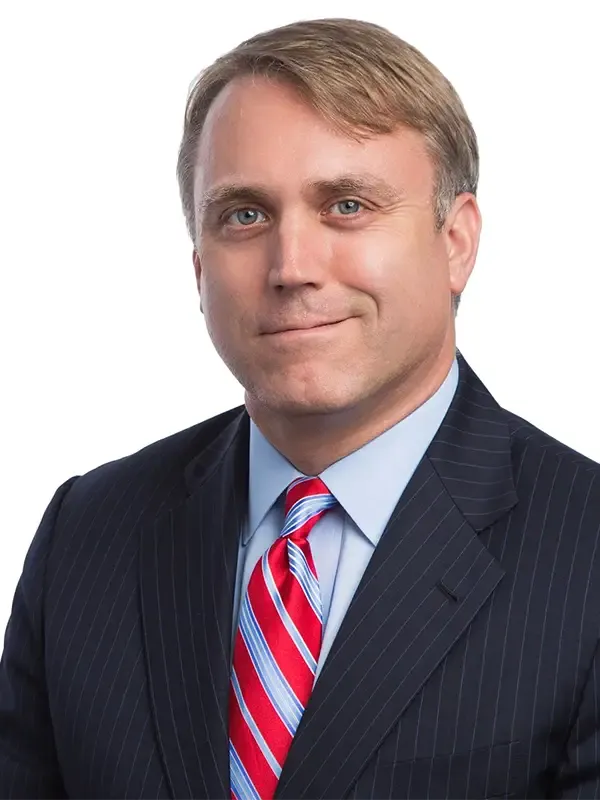
Question 1: Priorities
Question: If elected, what will be your top three priorities in the upcoming Congressional term?
Answer: We can fix a lot of problems with economic growth. My focus will continue to be on securing investments for our entrepreneurs with good manufacturing jobs and a relentless focus on 21st century energy solutions, with Virginia farmers large and small able to provide good food for good health, and at the federal level providing a strong focus on preventing fraud and holding those engaged in fraud accountable to the American taxpayer. Obviously, we live in a changing world with changing economies, all with unique pressures on working class families. My focus is and will continue to be on small communities and families, providing the best environment for them to thrive and flourish so that the next generation will look forward to a future brighter than our own.
Question 2: Antisemitism
Question: Antisemitism has reached unprecedented levels in the United States. What do you think Congress’ role in fighting this age-old hatred is and how will you fulfill that role?
Answer: Borrowing a line, antisemitism chooses hatred because hate itself is a faith. If socialism is the religion for people who have lost religion, then antisemitism is the religion for people who abandon reason. There is a reason why people who believe in absolutely nothing somehow seem to agree on antisemitism, and it goes back to one singular point — that in the Western tradition, it is the Jews who give the Western canon the idea of a single omnipresent God, who gives reason alongside faith, who makes universal the ideas of human dignity, equality, and moral underpinnings of the law. As a Virginian, Thomas Jefferson’s Statute for Religious Freedom remains the cornerstone of what I believe in terms of religious freedom, which includes a freedom from coercion and at core a basic freedom from fear as expressed by the Four Freedoms (freedom of religion, freedom of conscience, freedom from want, freedom from fear). Any religion or ideology — whether sacred or secular — which uses violence or coercion as a means to achieve an end is implicitly against what makes us all American. As an elected official, I will remain committed to religious freedom in a free and open public square and will continue to seek out like-minded individuals who share those common sense values. Communication and dialogue replace miscommunication and monologue every time.
Question 3: Security
Question: How would you address the security concerns of local synagogues, other houses of worship, faith-based agencies, and community centers?
Answer: Many, indeed most, of these concerns can only be addressed at the state and local levels. Yet there are some things we can do from a moral leadership perspective. The rise of violence as a means of expressing political sentiment is not a positive development in the American political landscape. Polling today suggests that too many young people believe either that speech is violence, or that violence or coercion can be applied as an antidote to speech they do not like. At core, we have to get back to the idea that those with whom we disagree are not enemies but opportunities to engage and perhaps even learn a thing or two. That sort of respect isn’t always the endgame of politicians and demagogues, and it may not always be rewarded, but we could certainly use a few more people out there willing to stand tall and stand firm to give courage to the rest of us who do see the problem and want it changed.
Eugene Vindman (Incumbent)
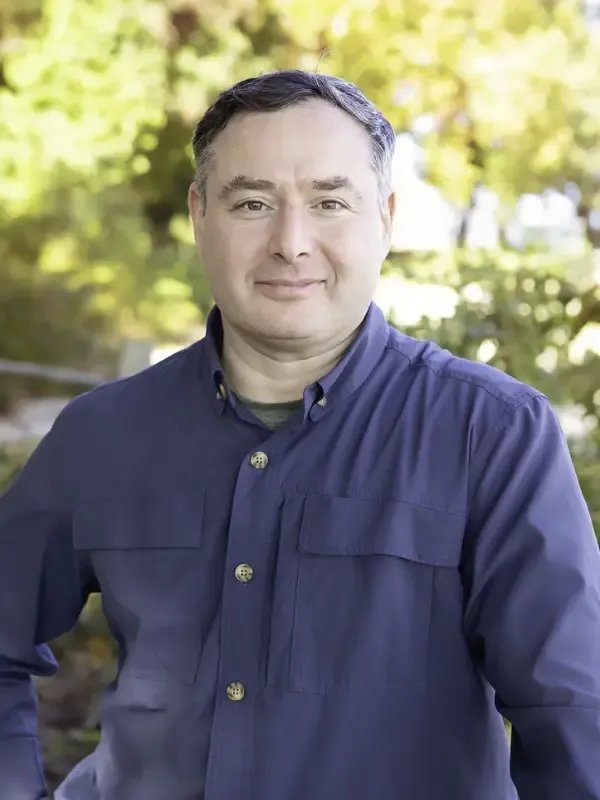
Question 1: Priorities
Question: If elected, what will be your top three priorities in the upcoming Congressional term?
Answer: I am running for reelection because there is still much more work to do to lower costs for working families, tackle corruption, root out hatred, and deliver tangible results for the Virginians I represent. Everywhere I go, I hear from Virginians struggling with the rising costs of groceries, housing, health care, and utilities. I will keep taking on the powerful interests that drive up costs and fighting for policies that put working families ahead of corporate profits.
Second, I will continue working to restore accountability and trust in government. Public service should be about serving the American people, not enriching yourself or your friends. I have pushed to ban members of Congress from trading individual stocks, crack down on the revolving door between government and special interests, and hold elected officials accountable when they abuse the public trust.
Finally, I will remain focused on delivering tangible results for Virginia’s Seventh District. Whether it is improving care for veterans, supporting our farmers, standing up for underserved communities, protecting federal workers, strengthening our national security, or bringing federal resources back to our communities, my job is to make government work for the people I represent. I came to Congress to solve problems, challenge a broken status quo, and put people ahead of powerful interests. Those will remain my priorities in my second term as well.
Question 2: Antisemitism
Question: Antisemitism has reached unprecedented levels in the United States. What do you think Congress’ role in fighting this age-old hatred is and how will you fulfill that role?
Answer: As a Jewish refugee from Soviet Ukraine, I know the importance of rooting out antisemitism and hatred in all forms. Antisemitism threatens our shared values, our security, and the safety of communities across the country. Violent extremism thrives on dangerous conspiracy theories, antisemitic lies, and rhetoric designed to divide us. Congress needs clear information about how this hatred is being weaponized so we can strengthen our response and keep our communities safe. That is why I have made combating antisemitism a priority in Congress. I led the bipartisan Violent Antisemitism Threat Assessment Act to assess the role antisemitism plays in violent extremist movements and help policymakers better understand and respond to these threats. I have also signed on to legislation condemning antisemitic, hate-filled rhetoric spread by prominent online personalities and calling on social media companies and public leaders to denounce and address it. We cannot allow antisemitism to become normalized, whether online or in our communities. There is no place for antisemitism in America. I will continue working across the aisle to confront hatred and protect Jewish communities.
Question 3: Security
Question: How would you address the security concerns of local synagogues, other houses of worship, faith-based agencies, and community centers?
Answer: Every synagogue, house of worship, faith-based organization, and community center should be able to serve its community safely and without fear. That means investing in security while also confronting threats before they become acts of violence. I led the bipartisan Violent Antisemitism Threat Assessment Act to better understand how antisemitism is fueling violent extremist movements and strengthen our ability to respond to these threats. I also cosponsored the SACRED Act to make it a federal crime to intentionally intimidate, obstruct, or harass people exercising their right to religious worship within 100 feet of a place of worship. I support funding for stronger coordination between federal, state, and local law enforcement. I will continue fighting to ensure Jewish community spaces have the resources, information, and support they need to stay safe.
8th Congressional District Candidates
Don Beyer (Incumbent)
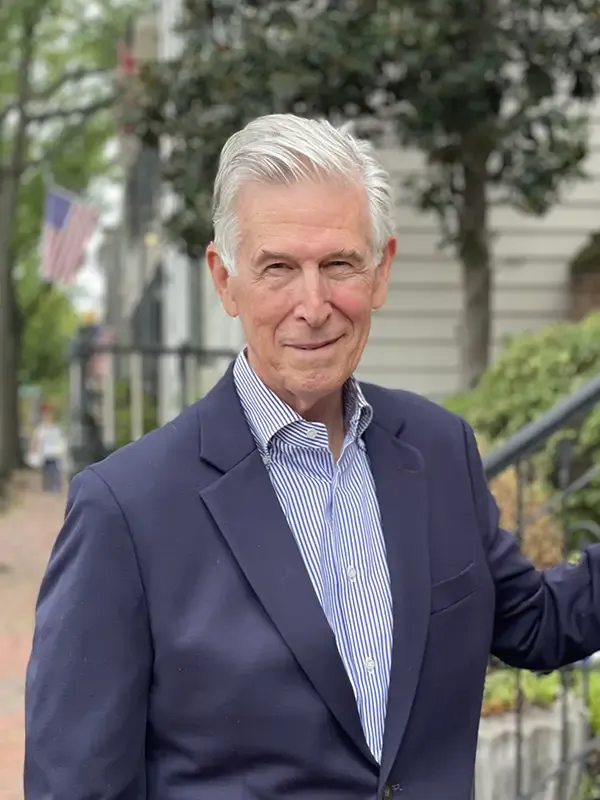
Question 1: Priorities
Question: If elected, what will be your top three priorities in the upcoming Congressional term?
Answer: My top three priorities will be:
- Standing up to President Trump and his corrupt, venal administration. We're all aware of Trump's relentless attacks on our neighbors, civil service and the rule of law. Job one of what I hope will be a new Democratic majority will be to rein him in, limit the damage he can cause as a lame duck, and begin to put things right.
- Building a fairer and more affordable economy. We need a more equitable tax system, housing that people people can afford, wages that keep up with inflation and to put money in people's pockets by end Trump's tariff madness.
- Making sure our technological future actually benefits the American people, that means responsible AI and Data Center regulation, affordable clean energy, and continuing to work to solve the hardest problems like mental health challenges and suicide.
Question 2: Antisemitism
Question: Antisemitism has reached unprecedented levels in the United States. What do you think Congress’ role in fighting this age-old hatred is and how will you fulfill that role?
Answer: I have long been dedicated to fighting the scourge of antisemitism and I take that role very seriously. I have been leading that charge to push back on the dismantling of the Department of Education and its Office of Civil Rights (OCR). OCR investigates antisemitic incidents on college campuses, and the Trump Administration has dismantled its hubs, cut its staff, and fully weakened its ability to investigate reported incidents. I have also been a champion in my time in office on tackling hate crimes. Right now, antisemitic incidents are underreported. My law, the Jabara-Heyer NO HATE Act, would help police better respond and report these incidents, and was signed into law by President Biden in 2021. I have introduced successor legislation, the Improving Reporting to Prevent Hate Act, to review whether police are credibly reporting now that I have passed legislation to provide them the resources and training they need to be able to do so.
Question 3: Security
Question: How would you address the security concerns of local synagogues, other houses of worship, faith-based agencies, and community centers?
Answer: These concerns are very real. I have consistently argued for the highest possible funding for the nonprofit security grant program (NSGP), which provides financial resources to support synagogues’ and jewish community centers’ security needs. And more recently I have joined efforts to push back on the new compliance requirements on NSGP from this administration which will divert limited funds and burden the institutions the program was meant to protect.
Tony Sabio
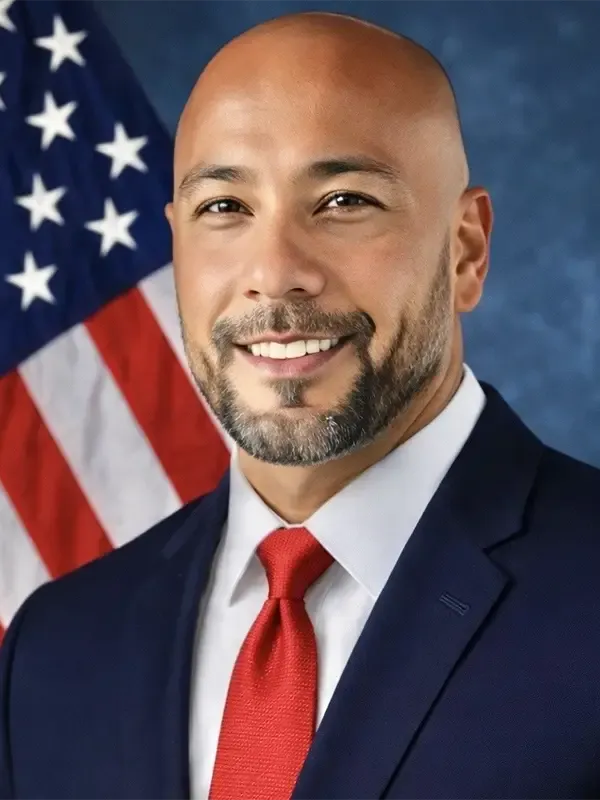
Question 1: Priorities
Question: If elected, what will be your top three priorities in the upcoming Congressional term?
Answer: If elected, my top three priorities will be:
- Affordability and Economic Opportunity Northern Virginia families are being squeezed by housing, energy, healthcare, and everyday expenses. I will focus on affordable and reliable energy, attainable housing, strengthening small businesses, creating American jobs, and building a stronger private-sector economy in Northern Virginia.
- A Safe and Secure America Government’s first responsibility is protecting its people. I will support secure borders, strong law enforcement, and the removal of violent criminal illegal immigrants. I will also stand firmly against antisemitism, hate crimes, and threats against Americans because of their faith or heritage, while defending religious freedom for all Americans. Abroad, America must remain strong, support our democratic allies, including Israel, and confront terrorism and hostile regimes that threaten Americans and our allies.
- Common-Sense Healthcare Americans should have access to quality healthcare without being financially overwhelmed. I will work to lower prescription drug and healthcare costs through greater transparency, competition, expanded choices, and reforms that protect the relationship between patients and their doctors. Underlying all three priorities is something I believe Washington desperately needs: the ability to work across party lines. We can disagree without becoming enemies. America has never been strengthened by division. We move forward when we have the confidence to stand by our principles, the courage to work with those who disagree with us, and the faith to believe that our best days are still ahead.
Question 2: Antisemitism
Question: Antisemitism has reached unprecedented levels in the United States. What do you think Congress’ role in fighting this age-old hatred is and how will you fulfill that role?
Answer: Antisemitism has no place in America. Congress has a responsibility to ensure that every American can live, worship, attend school, and participate in their community without fear because of their faith or heritage. This issue is also personal to me. During my federal service, I was stationed in Jerusalem, where I gained firsthand experience with Israel and the region’s complex security environment. Following Hamas’s horrific October 7 attack, I returned to Israel to support humanitarian and rescue efforts, working alongside others to help locate missing individuals and move civilians to safer locations. Those experiences reinforced for me that terrorism and antisemitic hatred are not abstract political issues—they have very real consequences for families and communities. Congress must confront antisemitism wherever it appears—whether from the far right, the far left, radical ideologies, or foreign influences. Political affiliation should never determine whether we condemn hatred. I believe Congress must ensure that federal law enforcement has the resources necessary to investigate credible threats and protect synagogues, Jewish schools, community centers, and other vulnerable religious institutions. At the same time, we must vigorously defend free speech and religious liberty while recognizing the clear distinction between legitimate political disagreement and threats, intimidation, discrimination, or violence. As a member of Congress, I will stand against antisemitism, defend religious freedom, and work across party lines to confront hatred in all its forms. We can disagree without becoming enemies. America is strongest when we stand together in defense of the freedom and dignity of every American.
Question 3: Security
Question: How would you address the security concerns of local synagogues, other houses of worship, faith-based agencies, and community centers?
Answer: Security for synagogues, houses of worship, faith-based organizations, and community centers is not an abstract policy issue for me—it is work I do today. In my current profession, I provide security assessments and security personnel to help protect synagogues and Jewish schools. I have developed comprehensive security response measures and emergency action plans and provided active-shooter training to help organizations prepare for the threats they may face. That experience has taught me that security begins long before an emergency. It starts with identifying vulnerabilities, strengthening access control and physical security, training staff, establishing clear emergency procedures, and building strong relationships with law enforcement and first responders. In Congress, I would support strengthening programs such as the Nonprofit Security Grant Program so at-risk religious and community institutions have access to the resources needed for security improvements. I would also work to make those resources more accessible to smaller congregations that may lack the staff or expertise to navigate a complicated federal grant process. I would advocate for stronger information-sharing and coordination among federal, state, and local law enforcement and faith communities so credible threats are identified and communicated quickly. Federal resources should support—not replace—the relationships between local institutions and the public-safety agencies that protect their communities. Most importantly, our goal should not be to turn every synagogue, church, mosque, school, or community center into a fortress. The goal is to create an environment where Americans can worship, learn, and gather freely without fear. I have spent much of my professional life protecting people. I would bring that real-world security experience to Congress to help ensure our faith communities have the resources, training, and partnerships necessary to remain both safe and welcoming.
10th Congressional District Candidates
Dave Beckwith
Question 1: Priorities
Question: If elected, what will be your top three priorities in the upcoming Congressional term?
Answer: My top priorities as the Member of Congress for VA-10 will be: 1. Bringing down the cost of living, starting with energy. Families here are paying more for groceries, housing, and now electricity. Loudoun is the data center capital of the world, and that demand is showing up on our bills. Richmond just made it worse. Democrats put Virginia back into RGGI, eliminated our ability to produce our own power, which charges our power plants for every ton of carbon they emit- a charge plants in West Virginia and Pennsylvania do not pay. So we generate less at home, buy more from them, and pay for it twice. I support an all-of-the-above energy policy, including nuclear, natural gas, and solar- everything that works so Virginia produces what Virginia uses. In Congress, I will speed up permitting for new generation and back next-generation nuclear, which runs around the clock. A state that makes its own energy controls its own prices.
Question 2: Antisemitism
Question: Antisemitism has reached unprecedented levels in the United States. What do you think Congress’ role in fighting this age-old hatred is and how will you fulfill that role?
Answer: Antisemitism is the oldest hatred in the world, and Americans have made a mistake in assuming we are immune to it. I spent thirty years in uniform and years at the Pentagon watching how ideologies move: they begin as words decent people tolerate because confronting them is uncomfortable, and they end in violence. We are watching that sequence play out at home. FBI data shows that in 2025, anti-Jewish incidents accounted for 63 percent of all religion-motivated hate crimes in this country, against a community that is roughly two percent of the population. Congress has three jobs here, and I'll do all three. First, fund the protection of Jewish institutions and treat it as the national security line item it is, not a discretionary nice-to-have that shrinks whenever appropriators need an offset. Second, enforce the laws already on the books. That means oversight of DOJ and FBI on hate-crime investigation and prosecution, pressure on the hundreds of law enforcement agencies that still submit incomplete hate-crime data, and enforcement of Title VI against universities that take federal money and then leave Jewish students to fend for themselves. Third, and this one costs nothing but courage, speak with moral clarity and refuse to launder antisemitism when it comes from your own side. Condemning it when your opponents do it is easy. Condemning it when your allies, your donors, or the loudest voices in your own coalition do it is the actual test. I will pass that test every time. Ensuring the safety of the Jewish community requires that we call out antisemitism in all its forms. Too often, antisemitism hides behind the language of anti-Israel and anti-Zionist rhetoric. Reasonable people understand the difference between legitimate criticism of a government and screeds against a people. Yet much of the world holds the only the Jewish state to a standard it applies to no other country, up to and including punishing its leaders or threatening them with imprisonment. We must stand with Israel in its time of need and reject antisemitism wherever it appears.
Question 3: Security
Question: How would you address the security concerns of local synagogues, other houses of worship, faith-based agencies, and community centers?
Answer: I would work to ensure that local law enforcement and community non-profit organizations have strong working relationships and the resources that they need to ensure the safety of local synagogues, other houses of workshop, faith-based agencies and community centers. I would additionally work to improve the functionality of and the funding for the Non-profit Security Grant Program, the main federal program that pays for security for these entities. It is far too small, and it is designed in a way that shuts out the congregations that need it most. The program allots $300 million a year, for every synagogue, church, mosque, day school, and community center in the country. In FY 2026, The National Capitol Area received $6.47 million to fund more than $15 million in requests. This is unacceptable. The security needs are real, and these entities need real capital to meet those needs. The rules are the other problem. The grant pays you back after you spend the money, so you need the cash up front. And to compete, you need a professional security assessment and a detailed written application. A large institution hires someone to handle all that. A 150-family congregation in Leesburg or a mosque in Manassas cannot and loses out to the ones who did. I will fight for three changes: steady year-to-year funding so congregations can plan; money up front instead of only paid back; and a simpler application, with the federal government providing the security assessment for free. My office will hold a yearly workshop in each of VA-10’s counties to walk congregations through it. Safety shouldn't depend on whether you can afford a grant writer.
Suhas Subramanyam (Incumbent)
Question 1: Priorities
Question: If elected, what will be your top three priorities in the upcoming Congressional term?
Answer: In a second term, I hope to continue the work I have already started to lower costs for Virginia families – including the cost of health care. Whether it’s the price of a first home, groceries, or prescription drugs, costs are making life unaffordable for too many Virginians. I look forward to continuing to work on legislation to bring costs down in our community and expand access to quality health care. Our district is also home to tens of thousands of federal workers and government contractors, and we have seen the impacts of the Trump Administration’s federal cuts firsthand. I will continue to stand up and protect our federal workers and contractors. I am also committed to make sure that our government holds itself accountable and is working for our community. We have seen too many examples of self dealing and corruption, and we need change – including common sense stock trading bans for the Members of Congress. Making sure that our communities are safe and heard is also a top priority: safe from the rise in gun violence, and safe from acts of hate – including anti-semitism. And heard when facing new data centers in our neighborhoods. All of our communities deserve a voice.
Question 2: Antisemitism
Question: Antisemitism has reached unprecedented levels in the United States. What do you think Congress’ role in fighting this age-old hatred is and how will you fulfill that role?
Answer: Congress must be committed to combatting anti-semitism and hate in all forms. As anti-semitism continues to rise, I have championed legislation and advocated for funding to keep our communities safe. I have pushed for nonprofit security grants, for funding for the Office of the Special Envoy to Monitor and Combat Anti-Semitism, and I have co-sponsored legislation, such as the Pray Safe Act, to establish security best practices for nonprofits and houses of worship. Dating back to my service in the Virginia General Assembly, when anti-semitic graffiti appeared in my community, I introduced legislation requiring localities to take down hate speech graffiti.
Question 3: Security
Question: How would you address the security concerns of local synagogues, other houses of worship, faith-based agencies, and community centers?
Answer: In Congress, I have worked to safeguard the right to worship freely and safely, and always keep my door open to hear any concerns that communities have. In addition to supporting legislation to increase access to security for houses of worship, I have also pushed for the Improving Reporting to Prevent Hate Act to assess the accuracy of data on hate crimes. Accurate reporting is critical to ensuring that law enforcement and our communities have the data they need.
11th Congressional District Candidates
Arthur Purves

Question 1: Priorities
Question: If elected, what will be your top three priorities in the upcoming Congressional term?
Answer:
- Slash out-of-control government spending without cutting a program! The solution: Eat Real Food. Here’s why. Federal annual deficits are now $2 trillion. The federal government spends $2 trillion a year on medical care (Medicare, Medicaid, ACA). It’s the largest slice of federal spending, larger than Social Security ($1.5 trillion). Ninety percent of medical spending is on the chronic disease epidemic caused by the 10,000 unregulated additives in our “food” and by the old high-carb food pyramid, which was a prescription for diabetes. Follow the new food pyramid (eat eggs, full-fat dairy, red meat along with fruits and vegetables and get carbs from whole grains) and don’t buy chemicalized food (anything in a “box or a bag with a barcode”). Eating the way our grandparents did will reverse chronic disease and slash medical spending.
- Promote cheap and reliable energy. California has the most expensive gasoline in the U.S., due to unsubstantiated climate alarmism.
- Restore the ideal of marriage. Self-sufficient families are the alternative to big government. However, households headed by married couples have dropped from 66% in 1975 to roughly 47%. Unmarried women account for 88 percent of abortions. Single-parent families account for 53% of SNAP benefits. Morality cannot be legislated; it must be taught. We stopped teaching it when the Bible, Ten Commandments, and prayer were banned in public schools.
Question 2: Antisemitism
Question: Antisemitism has reached unprecedented levels in the United States. What do you think Congress’ role in fighting this age-old hatred is and how will you fulfill that role?
Answer: You are correct to describe antisemitism as an “age-old” hatred. This hatred is not new to our time. However, Congress cannot legislate an end to hatred. The role of Congress is to make laws regarding international relations and trade, and determine tax, budget, and economic policies.
Question 3: Security
Question: How would you address the security concerns of local synagogues, other houses of worship, faith-based agencies, and community centers?
Answer: Laws are effective only to the extent that the public supports laws. Words are more powerful than laws. Temper the polarization that leads to these attacks with words and actions that heal.
Many synagogues and other houses of worship in recent years have suffered casualties from active shooter situations. I would endorse what many have taken upon themselves: internal training in security measures among members, limiting entry by the general public, hiring security personnel, and working with local law enforcement.
James Walkinshaw (Incumbent)
Question 1: Priorities
Question: If elected, what will be your top three priorities in the upcoming Congressional term?
Answer:
- Affordability: Working families across the country are feeling the pressure of rising costs, including healthcare, gas, housing, and groceries. My top priority is to lower costs and ensure Virginia remains a place where working families can thrive. I oppose the Trump administration’s harmful tariffs and illegal war with Iran, which have increased costs for businesses and consumers alike. I support policies that will lower the cost of prescription drugs, including empowering Medicare to negotiate drug prices and capping out-of-pocket costs for seniors and other vulnerable populations. I strongly believe we must reinstate the ACA enhanced premium tax credits that Republicans allowed to expire.
- Defending Democracy: President Trump has repeatedly flouted court orders, bypassed due process, and threatened the foundational norms that sustain our republic. In Congress, I serve on the House Oversight and Government Reform Committee, and I am fighting to reassert Congress’s constitutional authority and provide a check on the President. This includes protecting federal workers from illegal firings, demanding accountability from the mass deportation machine, and reasserting congressional authority to declare war.
- Ending Corruption in Washington: This has been the most corrupt administration in American history. Trump and his family have personally made billions from digital schemes, foreign investments, and shady overseas projects. As Americans face rising costs, Trump has awarded no-bid contracts to his friends to build himself a golden ballroom. The American people deserve leaders who work for them, not politicians who use public office to enrich themselves and their friends. That’s also why I support a ban on members of Congress and senior executive-branch officials, including the President, from trading individual stocks.
Question 2: Antisemitism
Question: Antisemitism has reached unprecedented levels in the United States. What do you think Congress’ role in fighting this age-old hatred is and how will you fulfill that role?
Answer: Antisemitism must be confronted wherever it appears, and Congress must take a nonpartisan, comprehensive approach to fighting this hatred. In 2024, more than 9,000 antisemitic incidents involving harassment, vandalism, and assault were recorded in the United States, the highest number on record, with increases reported in every region of the country. I’m a cosponsor of the Antisemitism Response and Prevention Act, which establishes a federal office to combat antisemitism nationwide. We should address all sources of antisemitic rhetoric, especially those from public figures, influencers, and political movements. The federal government should provide resources and guidance to schools and support evidence-based antisemitism education, Holocaust education, and hate prevention programs.
Question 3: Security
Question: How would you address the security concerns of local synagogues, other houses of worship, faith-based agencies, and community centers?
Answer: As Fairfax County Supervisor, I helped Fairfax maintain its status as the safest large jurisdiction in the United States, with the lowest violent crime rate. This is the result of a shared commitment among local law enforcement, faith communities, and local leaders. I continue to meet regularly with Jewish and other faith-based leaders and their communities to hear and address their concerns. I support the Nonprofit Security Grant Program (NSGP), which provides critical funds to protect Jewish and other faith-based nonprofits from threats. This includes my joining a bipartisan effort supporting $1 billion in federal funding to enhance security measures at synagogues and other houses of worship.